
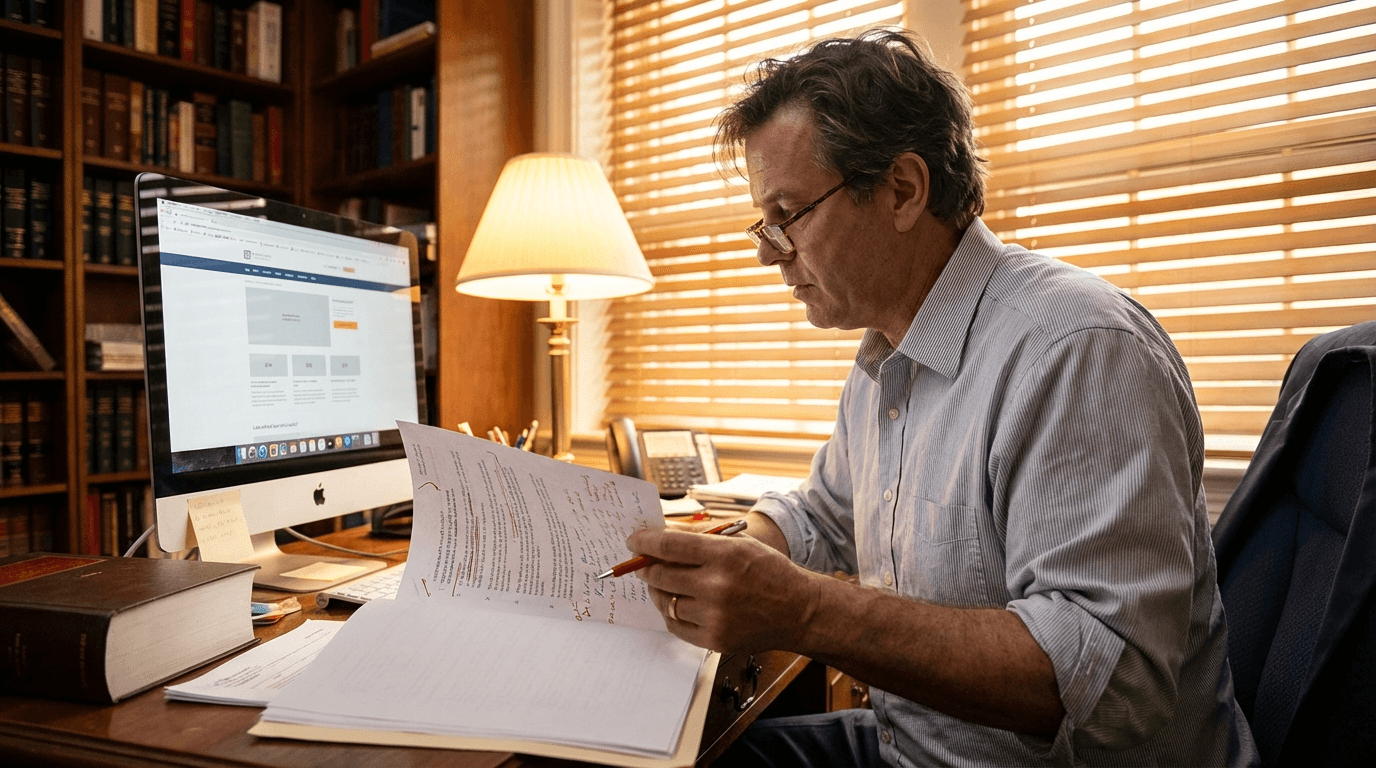
Marcus runs a small personal injury firm in a mid-size city. Smart guy, good lawyer, ten years of experience. His website read like a court filing. Words like “pursuant to,” “negligent parties,” and “recoverable damages” showed up in the first paragraph of his homepage. He thought it made him sound credible. His intake numbers told a different story.
The people searching for a personal injury attorney at 11pm are not in a calm, analytical headspace. They just got rear-ended. Their kid broke an arm at a trampoline park. They got hurt at work and don’t know if they can pay rent. They are scared, and they are confused, and they are typing things like “what do I do if I got hurt and it wasn’t my fault.”
When those people land on a website that reads like a legal brief, they leave. Not because they think the attorney is unqualified. They leave because nothing on the page sounds like it was written for them.
Marcus rewrote his homepage with one rule: write like you’re talking to someone sitting across from you at a kitchen table. “You were hurt. Someone else caused it. You probably have questions and you’re not sure what to do next. That’s exactly what we handle.” That’s the opening now. Calls went up 34 percent in the first 90 days.
The instinct to sound authoritative is understandable. Attorneys spend years learning a formal language and they associate it with competence. But online, that formality reads as distance. It signals that the firm is for sophisticated clients who already understand the process, not for the person who just got blindsided and needs help.
Plain language is not dumbing it down. It is respecting the reader’s situation. A scared client does not need to decode your vocabulary. They need to feel like you understand what they’re going through and that you can actually help.
The attorneys who convert best online are not the ones who sound the most impressive. They are the ones who sound the most approachable while still being specific about what they do and who they serve.
Frequently Asked Questions
Does using plain language on a law firm website make attorneys look less credible?
No. Plain language increases conversions because prospective clients, especially in personal injury, family law, and criminal defense, are emotionally distressed and need clarity. Formal legal prose signals distance, not competence.
What does plain language actually mean for a law firm website?
It means writing the way you would explain a situation to a client in your first consultation: short sentences, no Latin phrases, no passive voice, and leading with the client’s problem before describing your credentials.
Which practice areas benefit most from plain-language website copy?
Personal injury, criminal defense, family law, and immigration see the biggest lift because clients in those areas are under stress and searching in high-emotion moments. They respond to language that acknowledges their situation directly.
How do you write authoritatively without sounding stiff or formal?
Authority online comes from specificity, not vocabulary. Naming the exact type of cases you handle, the outcomes you’ve achieved, and the process a client will go through builds more trust than formal legal language does.
Can changing website copy alone increase attorney lead volume?
Yes, when the existing traffic is sufficient. If a site already gets consistent organic or paid traffic, rewriting the homepage and practice area pages in plain, client-focused language can increase contact form submissions and calls within 60 to 90 days.